A sunken driveway doesn't need replacing. It needs lifting and the void underneath filling
Polyurethane foam or cementitious slurry injected through small ports to raise settled concrete back to grade — a fraction of the cost of tear-out, finished the same day, and usable almost immediately.
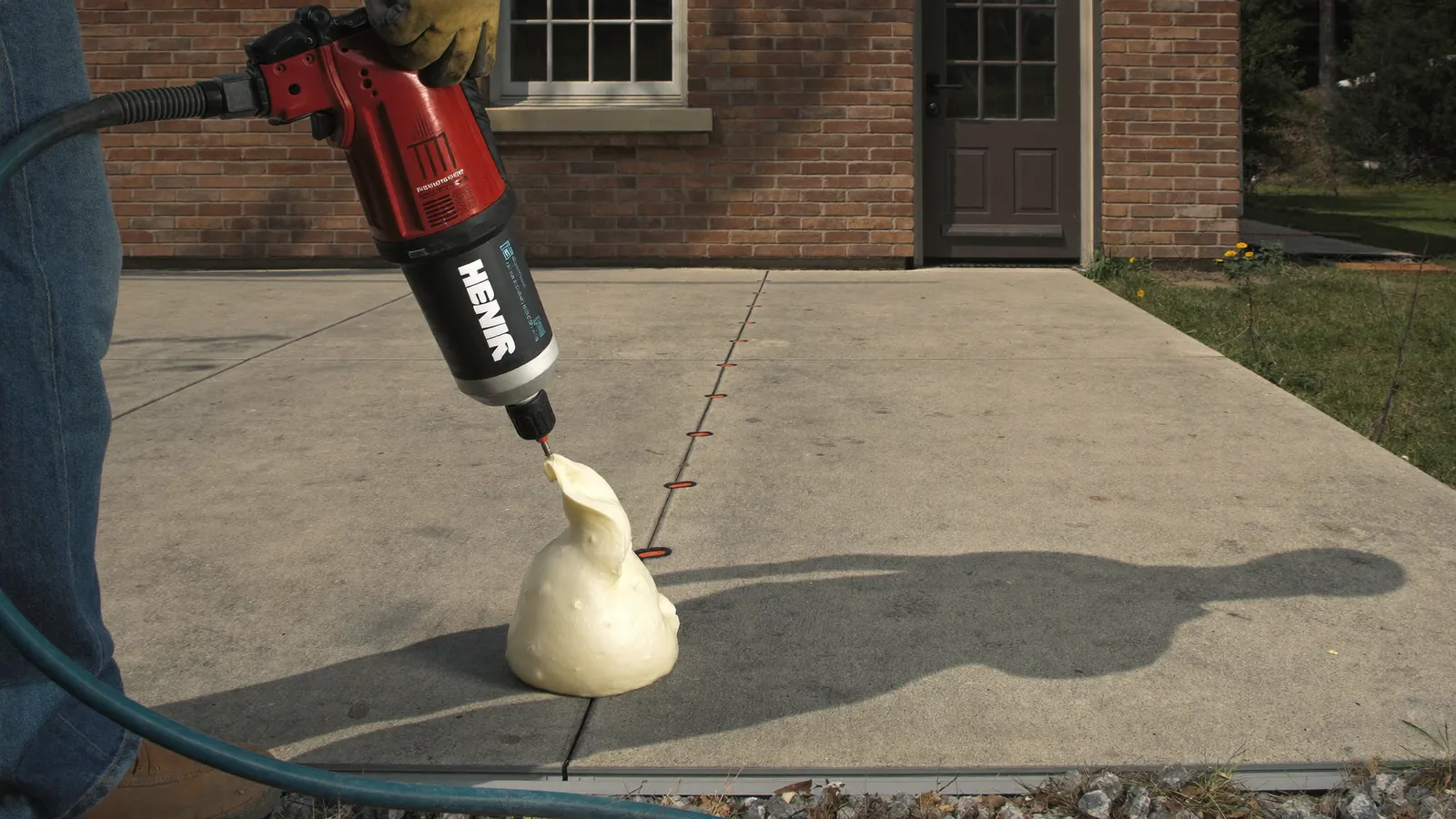
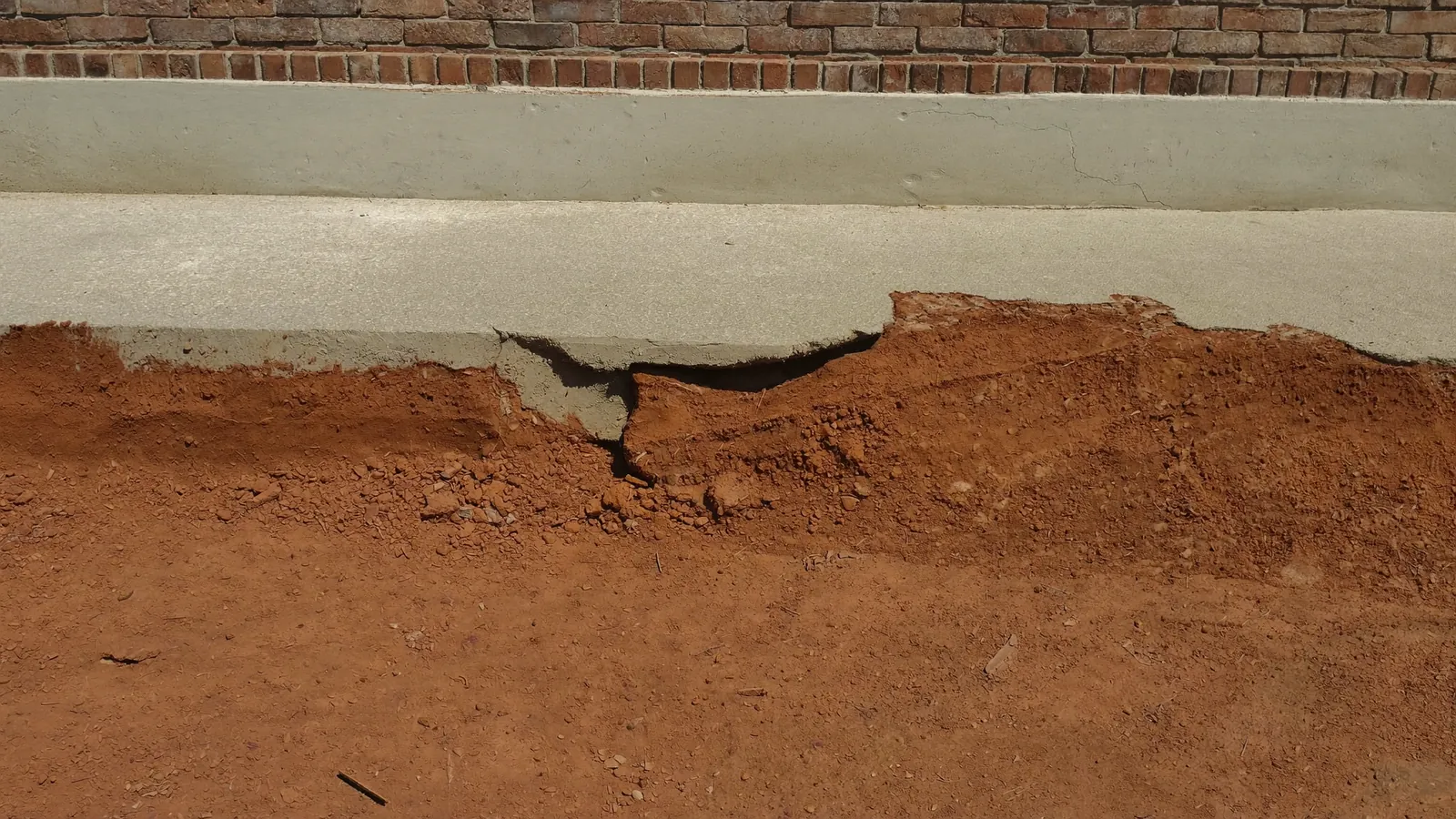
Flatwork settles here for the same reason houses do, only faster. A driveway, apron, patio or sidewalk is a thin slab sitting directly on red clay with no deep footing and no real load to hold it down. When the clay shrinks in a dry Oklahoma summer, a void opens beneath the concrete. The slab then has nothing supporting its middle, so it cracks and drops into the void. Add the backfill around a foundation, which is almost always less compacted than undisturbed ground, and the strips of concrete next to the house — the garage apron, the front walk, the patio — are usually the first to go.
The instinct is to rip it out and repour. Usually that is the wrong call. Replacement means demolition, disposal, new concrete, and a cure period before you can drive on it, at several times the cost — and critically, it does not address the void. Pour a new slab onto the same unsupported ground and you have bought yourself a newer version of the same problem. Lifting fills the void and raises what is already there.
Two methods do it. Polyurethane foam injection drills small ports, typically around five-eighths of an inch, and injects a two-part polymer that expands on mixing, filling the void and lifting the slab under controlled pressure. The foam is light — it adds very little load to soil that is already struggling — closed-cell so it does not absorb water, and it cures within minutes, so the surface takes traffic almost immediately. Mudjacking, or slabjacking, is the older approach: larger holes, typically an inch or two, and a cementitious slurry pumped beneath the slab to raise it. It is cheaper per job and perfectly effective in the right circumstances, though the slurry is heavier, the holes are more visible, and it needs longer to set. For most residential drives and patios in Edmond we lean toward foam. For large areas where load is not a concern and budget matters, slurry still earns its place.
What leveling will not do is make bad concrete good. If a slab is broken into multiple pieces, spalling badly, or has lost its structural integrity, lifting it just gives you broken concrete at the right height, and we will say so rather than taking the job. Nor does it fix the reason the void appeared. If the settlement next to your house is being driven by water running off the roof and soaking the backfill, lifting the apron without addressing the drainage means we will be back. And if the concrete against the house has dropped because the house is moving, that is a foundation conversation, not a flatwork one — which is one more reason the elevation survey comes first.
What's included
Void filled, not just slab lifted
The point of the work is filling the gap the clay left behind; raising the surface is the visible half of it.
Polyurethane foam injection
Small ports, a light closed-cell polymer that does not absorb water, controlled lift, and traffic within minutes of finishing.
Cementitious slurry where it suits
Traditional mudjacking for larger areas and tighter budgets, where the additional weight of the slurry is not a concern.
Driveways, aprons, patios, walks, pool decks
Any flatwork that has dropped — including the trip hazards where a sidewalk slab has lifted against its neighbour.
Ports patched
Injection holes filled and finished to blend as closely as the existing concrete allows.
Honest about replacement
When a slab is too broken or too far gone to be worth lifting, we tell you to replace it rather than taking the easier invoice.
Concrete leveling cost in Edmond, OK
| Item | Typical range | Notes |
|---|---|---|
| Single slab section lifted | $500 – $1,500 | Per section |
| Typical whole project | $1,500 – $4,000 | Around $2,800 average |
| Driveway, two-car, foam | $1,200 – $3,500 | Depends on drop and area |
| Garage apron / approach slab | $600 – $1,800 | Common first failure point |
| Patio or pool deck | $800 – $3,000 | By area and access |
| Sidewalk trip hazard, per slab | $300 – $700 | Often several at once |
| Mudjacking (slurry), per section | $500 – $1,200 | Larger holes, longer set |
| Replacement instead, per section | $1,200 – $3,000 | When lifting isn't appropriate |
These are 2026 budgeting bands drawn from published cost guides and what work of this kind runs in the OKC metro. Your figure comes after the elevation survey, itemized by pier, section or linear foot, and the written scope holds for 30 days.
Recent work
Questions we get about concrete leveling
Foam or mudjacking — which is better?
Neither universally. Foam uses smaller holes, weighs far less so it adds almost nothing to soil that is already failing, is closed-cell so it does not take up water, and cures in minutes — you can drive on it the same day. Mudjacking slurry costs less per job and works well on large areas, but it is heavy, needs bigger holes, and takes longer to set. For a residential driveway or patio in Edmond, where the soil is the problem in the first place, we usually recommend foam. For a big expanse of commercial flatwork on a budget, slurry is still a sound choice.
How long does it last?
The fill itself is permanent: polyurethane does not break down, wash out or decompose, and cured slurry is stable. What is not permanent is the ground. If the clay beneath continues to cycle, or water keeps washing fines out from under the slab, a new void can form. That is why we look at where your downspouts discharge and how the ground falls before we lift anything. Done alongside sensible drainage, a foam lift generally holds for many years. Done while a downspout keeps pouring into the backfill, it will not.
Can you lift a cracked slab?
Often, yes — cracked is not the same as broken. A slab with a crack or two can usually be lifted as sections, and we fill and seal the cracks afterwards. What cannot be lifted usefully is concrete that has fractured into many pieces, is badly spalled or has lost structural integrity: lifting that gives you broken concrete at the correct height. We will tell you honestly which category yours is in, including when the answer costs us the job.
How soon can I drive on it?
With polyurethane foam, essentially straight away — the material reaches working strength within about fifteen minutes, so a driveway is usable the same day, usually within the hour. With cementitious slurry, allow a day or two before vehicle traffic. Either way, foot traffic is fine almost immediately. We will give you a specific time before we leave.
Will the holes show?
Somewhat, yes, and we would rather you expect that. Foam injection holes are about five-eighths of an inch and we patch them with a color-matched compound; on a weathered or textured drive they are genuinely hard to spot afterwards, while on a smooth broom-finished slab you will be able to find them if you look. Mudjacking holes are considerably larger and more visible. Nobody can make them vanish, and a company promising an invisible finish is overselling.
My driveway is sinking right next to the house. Is that the foundation?
It might be, and it is worth checking rather than assuming. Settlement at the house line is very often just the backfill — the ground around a foundation was excavated and replaced during construction and is never as well compacted as undisturbed soil, so it continues consolidating for years. That is a flatwork problem. But the same symptom appears when the house itself is moving. The elevation survey tells us which, and it is why we would rather look at the whole picture before quoting to lift an apron.