What piers cost in Edmond, and how many your house is likely to need
Push piers run roughly $1,200 to $2,800 each and helical piers $1,500 to $3,200. A typical house needs six to twelve. Multiply those together and you have why a pier count given without a survey is worth nothing.
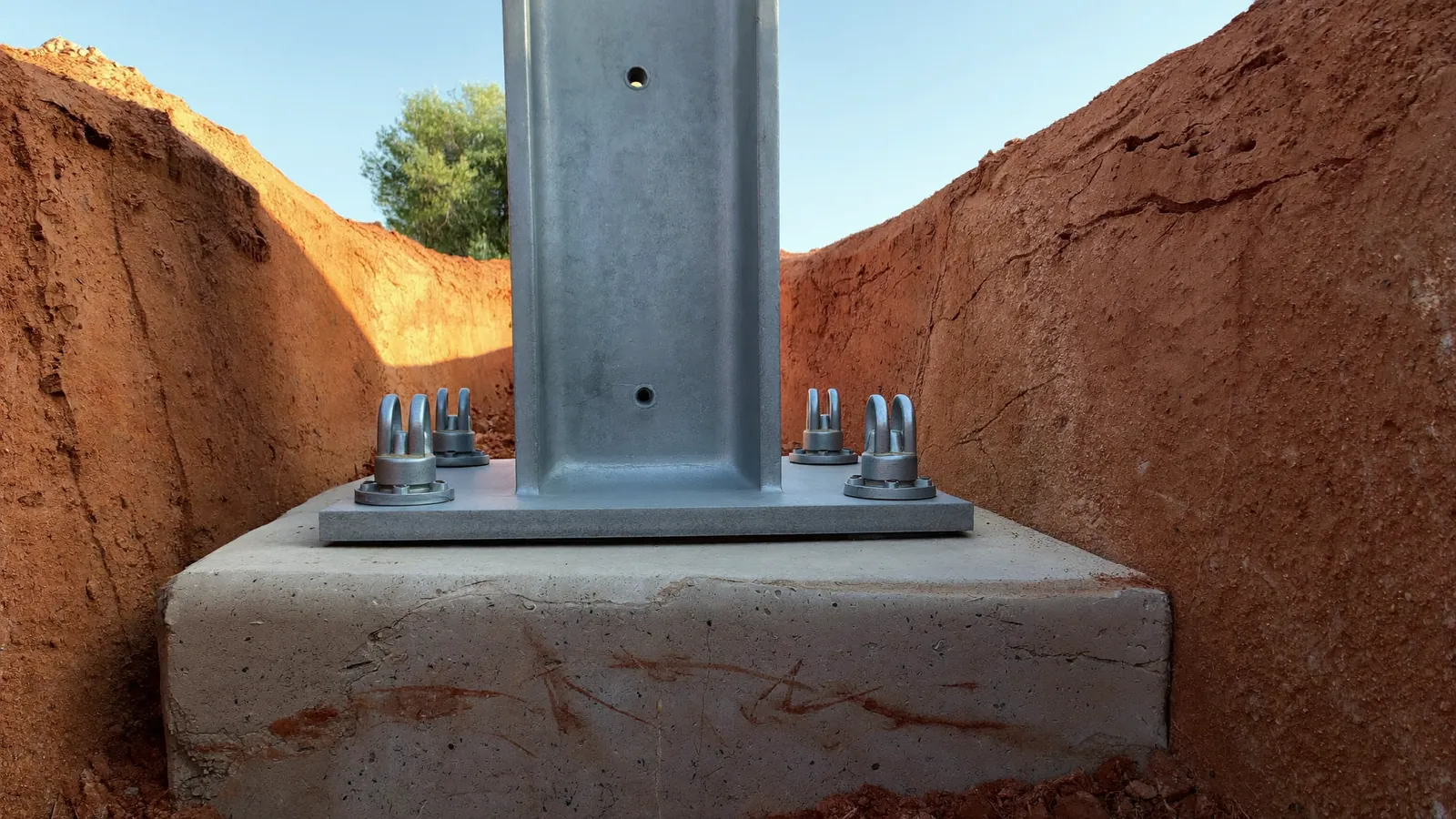
Piering is the expensive end of foundation work and the part people most want a number for before anyone visits. The honest structure of the answer is: the per-pier price is reasonably predictable, the pier count is not, and the count is what determines the bill.
Per-pier pricing
| Item | 2026 range | Notes |
|---|---|---|
| Steel push pier, exterior | $1,200 – $2,800 | Each; ~$1,800 typical |
| Helical pier, exterior | $1,500 – $3,200 | Each; ~$2,200 typical |
| Interior pier through slab | Add $300 – $700 | Cutting and restoration |
| Slab opening cut and restored | $400 – $900 | Per opening |
| Porch or stoop stabilization | $2,500 – $8,000 | Usually helical |
| Commercial helical pier | $1,800 – $4,000 | With torque documentation |
| Engineer's design and report | $350 – $900 | Residential; their fee |
| Permit | $100 – $500 | By jurisdiction |
How many piers?
For a 2,000 square foot house with confirmed settlement, six to twelve is the usual range, putting the job somewhere around $8,000 to $18,000. But that band hides a great deal. A house with movement confined to one corner might need three or four. A house where most of the perimeter has lost support, or a larger property, can need twenty or more. What determines it:
The extent of the movement. How much of the perimeter shows deviation on the floor contour, and how severe it is. This is the primary driver.
The load path. Piers go where the structure can actually be picked up — against the footing, under load-bearing walls, at corners and at points where loads concentrate. They are not spaced evenly along a wall for arithmetic convenience.
Spacing. Pier spacing is determined by the structure's ability to span between support points. Heavier, stiffer construction can span further; lighter construction needs them closer together.
Interior low points. Where the contour shows a depression in the middle of a slab rather than at the edge, interior piers may be needed, which cost more and disrupt more.
Which system, and what it costs you
Push piers are hydraulically driven using the weight of the house as the reaction force, advancing until they meet refusal in load-bearing strata. Because the structure supplies the resistance, each pier is effectively load-tested as it is installed — you learn what it will carry as it goes in. They suit heavier structures, which a full masonry or brick-veneer house generally is. They are typically the less expensive of the two.
Helical piers are screwed into the ground by a hydraulic torque motor, with installation torque correlating to capacity, so the specification is a torque figure rather than a depth. Because the machine supplies the force, they do not need weight above them — which makes them the right choice under porches, stoops, additions, light-framed structures and new construction, and in conditions where push piers struggle. They usually cost a little more per unit and they produce a documented capacity figure per pier, which is why they are common on commercial work.
On many properties both get used: push piers along the main house, helical under a porch or an addition. The soil and the structure decide, not a preference, and a contractor who only ever installs one system is choosing for you.
What the price should include
A pier price that looks low sometimes is low because something is missing. A complete scope covers excavation at each location, exposing and preparing the footing, the bracket, the pier sections and installation to criteria, the instrumented lift, locking off, backfill and compaction, spoil removal, and reinstatement of the ground or the slab. Ask specifically about: spoil disposal, slab restoration where interior work is involved, landscape reinstatement, the permit, and whether the lift is included or priced separately. Those are the items that reappear as extras.
Common questions
Why do pier prices vary so much between companies?
Scope, system and sometimes pier count. One proposal may include the permit, spoil removal, slab restoration and the lift while another prices them separately; one may specify helical where another specifies push; and one may simply be proposing fewer piers, which is the biggest variable of all. Put the itemized scopes side by side — count, locations, method, criteria, what is included — and the differences usually become obvious. Comparing totals alone tells you very little.
How deep will the piers go?
As deep as it takes to reach competent material below the active zone where the clay cycles seasonally. In the OKC metro that is commonly somewhere between ten and twenty-five feet, but it varies genuinely, sometimes across a single property. A push pier goes until it refuses; a helical goes until it reaches its specified torque. That is why a scope states criteria rather than a depth — a fixed depth in a quote is a pricing assumption, not an engineering one.
Can I pier just one corner?
Frequently yes, and where movement is genuinely localized it is the sensible, proportionate scope. What matters is that the piered section and the unpiered section are not left in a way that creates a new differential — we will tell you where the sensible boundary is. Partial piering is common and appropriate; what we would avoid is piering a few points purely to reach a lower headline number while leaving an obviously failing elevation unsupported.
Does the price include lifting the house?
In our scopes, yes — the lift is part of the work and the achieved elevation is documented against the opening survey. It is worth checking this specifically with any proposal you receive, because some price stabilization and lift separately, and some stabilize in place without attempting a lift at all. Stabilizing without lifting is a legitimate approach in some situations, but you should know which one you are buying.
Is a lifetime warranty worth anything?
It is worth exactly what the document says, so read it. Pier warranties typically cover the piers installed and the elevation achieved at those locations, and are usually transferable, which has real value at resale. What no honest warranty covers is movement in parts of the house where no pier was installed, because that soil was never touched. A warranty that appears to promise your whole house will never move again is either badly worded or misleading, and the exclusions page will tell you which.
Do piers damage plumbing?
They can if the lift is rushed, which is one of the main arguments for doing it slowly. Rigid drain lines under a slab have very little tolerance for movement, and lifting fast or unevenly is how they crack. Manifolded hydraulics raising in small increments across all piers together, with elevation readings running, is specifically how that risk is managed. On older houses with aged cast iron underneath, we will often suggest a plumbing test before and after as a sensible precaution.
Related: Push piers vs helical piers · Total repair cost · Pier installation · Permits