Foundation work in Mustang, a town that has been built quickly and recently
One of the metro's fastest-growing suburbs, with housing stock weighted heavily toward recent construction. The questions here are young-house questions — and the honest answer is often that nothing is wrong.
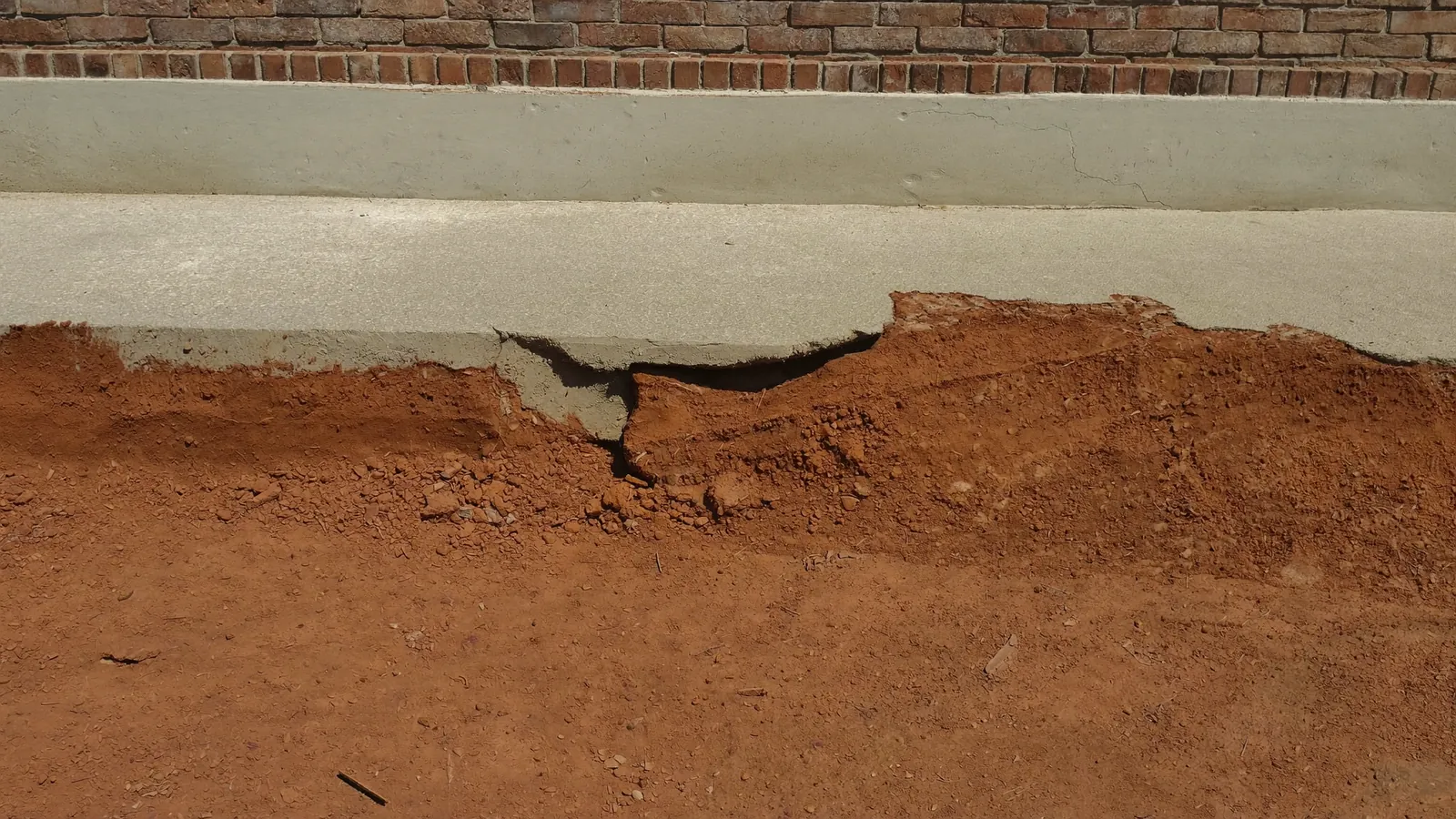
Mustang has grown fast. A Canadian County suburb southwest of Oklahoma City, it has added subdivisions steadily over recent decades, and the result is a housing stock weighted toward newer construction — predominantly post-tension slab on ground that was graded and prepared within the last twenty or thirty years. That shapes the work here more than anything about the soil, which is the same central Oklahoma expansive clay found across the metro.
The calls we take from Mustang are mostly from owners of houses under twenty years old who have noticed cracking and want to know whether it is serious. A large share of the time it is not, and we will say so after measuring. New houses settle into their soil over the first years. Concrete shrinks as it cures and most slabs develop fine shrinkage cracking in the first year or two. Drywall and plaster move. And the backfill around the foundation — ground excavated during construction and replaced — continues to consolidate for years, which is why the driveway, garage apron and front walk are nearly always the first things to drop on a young house. That is a flatwork problem, usually fixed with foam lifting at a fraction of what owners fear when they first see the gap.
What does cause genuine movement in newer subdivisions is water, and new builds are particularly exposed to it for a few predictable reasons. Grading on a new lot is often shaped by machine late in the build and never finished to a proper fall. Downspouts are commonly left discharging straight onto the backfill at the wall. Irrigation systems installed to establish new turf run frequently, and if the perimeter zones are watering the foundation every other morning through an Oklahoma summer, one strip of clay stays permanently damp while the rest dries hard. Landscaping goes in afterwards and often changes the falls again. Each of these is cheap to correct and each of them, left alone, produces exactly the uneven soil moisture that causes differential movement.
The post-tension point applies here as strongly as anywhere in the metro. Most newer Mustang construction uses stressed tendons through the slab, and nobody should cut that floor without locating them first. We confirm construction type, look for the stressing pockets, check the documentation and scan before any interior work. It takes very little time and the alternative is unacceptable.
What we do in Mustang
Young-house diagnosis
Separating initial settlement, concrete shrinkage and backfill consolidation from genuine structural movement, with measurements rather than opinion.
Post-tension slabs scanned
Tendons located and marked before any cutting, which on Mustang's newer housing is nearly every property.
Flatwork lifting
Foam lifting for the settled drives, aprons and walks that consolidating backfill produces on almost every new build.
New-build drainage finished properly
Machine grading corrected to a real fall, downspouts extended clear, and perimeter irrigation zones adjusted off the foundation.
Builder warranty documentation
An independent measured report with elevation readings, useful while a structural warranty is still live.
Canadian County permitting
The correct jurisdiction handled for the address rather than assuming Edmond's process applies.
Areas and roads we cover
- Mustang proper
- Mustang Road
- SW 59th Street
- SW 29th Street
- Czech Hall Road
- Sara Road
- Clear Springs
- Trails of Mustang
- Prairie Lakes
- Canyon North
- Morgan Road corridor
- Canadian County rural addresses
Foundation services in Mustang
- Foundation inspection and elevation survey, foundation repair, steel and helical piers
- Slab repair, crack injection, house leveling, pier and beam repair
- Concrete leveling, crawl spaces, basement and cellar waterproofing
- French drains and drainage, retaining walls, commercial buildings
Questions from Mustang homeowners
My house is only eight years old. Can it really have foundation problems?
It can, but more often it does not, and that is worth hearing before you worry. Initial settlement, curing shrinkage and consolidating backfill account for a large share of the cracking we are called to in newer Mustang homes, and the elevation survey frequently comes back within normal tolerance. Genuine movement does happen in young houses — variable fill, a drainage fault, or a plumbing leak will do it regardless of age — so it is worth measuring rather than assuming either way.
The gap between my driveway and garage is getting wider. Is that the foundation?
Almost certainly not. That gap is the signature of backfill consolidation: the ground around your foundation was dug out and replaced during construction, replaced soil never compacts to undisturbed density, and the flatwork poured on it settles while the house, which sits on a properly prepared pad, stays put. It is a concrete leveling job, generally foam injection through small ports, and it is one of the least expensive things we do.
Will my builder fix this under warranty?
Depends entirely on your warranty terms, the age of the house and what is actually wrong — structural warranties on new construction typically run a set number of years with a defined threshold for what qualifies. What we provide is an independent report with measured elevation readings, which is a much stronger basis for that conversation than a description of cracks. We have no interest in the outcome; if the survey says the floor is within tolerance, that is what the report says.
My sprinklers run along the house. Should I change that?
Yes, and it is one of the highest-value free changes available to you. Perimeter irrigation zones running every other morning keep that strip of clay permanently damp while the rest of the perimeter dries hard through the summer. Differential moisture around the footing produces differential movement, which is what cracks houses. Move heads back from the wall, adjust the arcs so they are not throwing at the foundation, and cut run times on perimeter zones. It costs nothing and it addresses a real cause.
Do newer post-tension slabs still need piers sometimes?
Yes, though less often. Post-tensioning makes a slab much better at bridging soft spots and keeps the concrete in compression, which is a genuine advantage on expansive clay — but it does not stop the soil moving, and a post-tension slab over a zone that has lost bearing support can still settle as a unit. When that happens the repair is piering at the perimeter beam, much as it would be on a conventional slab. Interior work needs the tendons located first, which is the main practical difference.
How far do you travel for Mustang jobs?
Mustang is a standard part of our service area along with Yukon and Piedmont, and there is no travel surcharge. The practical difference from an Edmond job is permitting, which goes through Canadian County and the City of Mustang rather than City of Edmond Building and Fire Code Services. We handle whichever applies to the address.
Nearby: Yukon · Piedmont · Deer Creek · full service area