Foundation work in Nichols Hills, where the trees are the single biggest factor
An established enclave of large older homes under a mature canopy. The canopy is the point: a big tree close to a house pulls moisture out of the clay on one side only, and that difference across the footing is what cracks brick.
Nichols Hills is a small, long-established city entirely surrounded by the Oklahoma City metro, with the highest property values in the area and a housing stock that is mostly considerably older than Edmond's. Large homes, generous lots, and — the detail that matters most for foundations — a mature tree canopy that has had decades to establish.
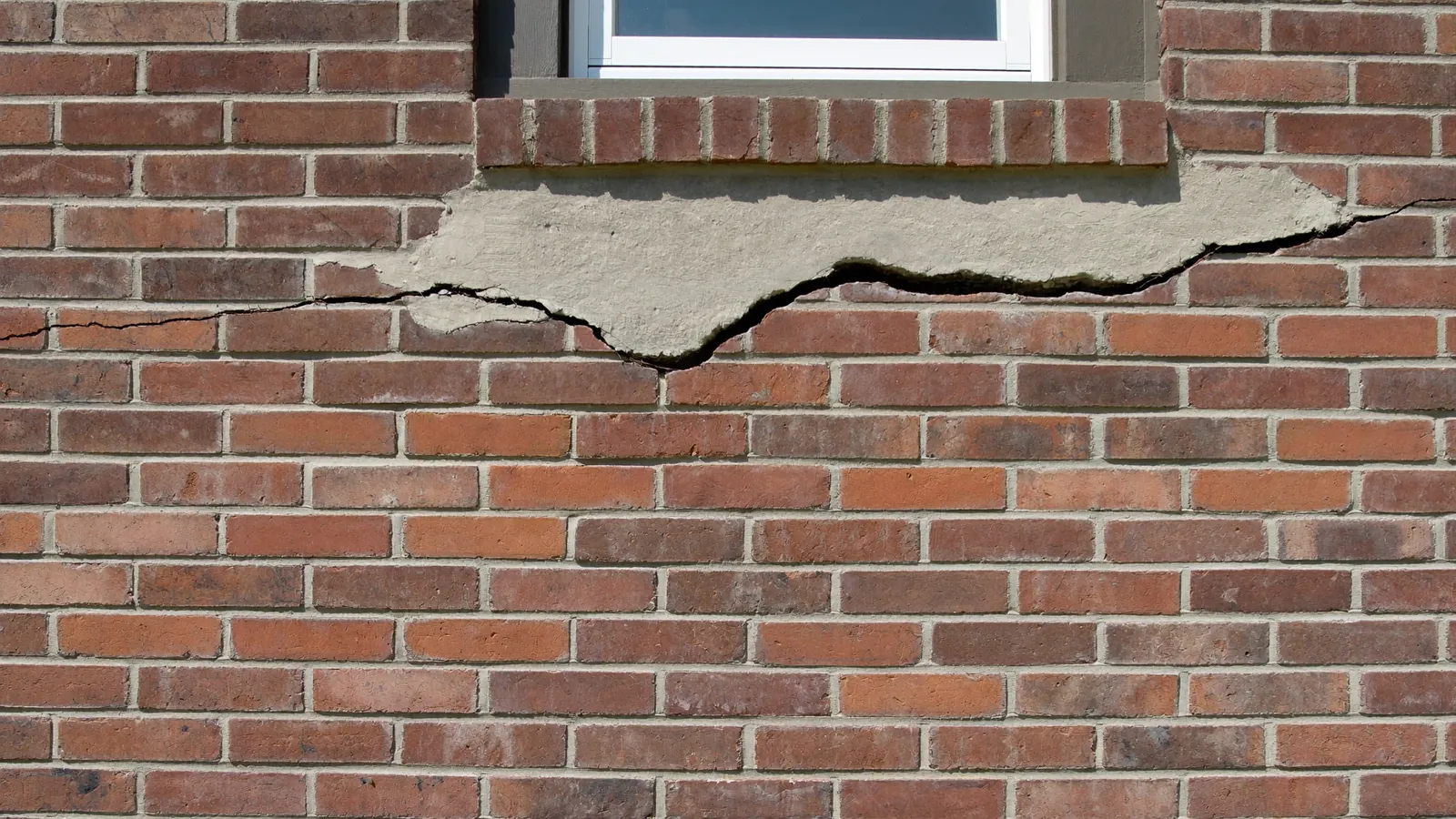
Trees are the dominant factor here and it is worth explaining the mechanism, because it surprises people. A mature tree is a substantial pump. Through a hot Oklahoma summer a large oak or elm moves a considerable volume of water out of the soil, and it takes that water from the ground within reach of its root system — which on a mature specimen extends well beyond the canopy. If that tree stands close to one side of a house, the clay on that side is drawn drier than the clay on the far side. Expansive clay shrinks as it dries. So one part of the footing loses support while the rest does not, and differential movement is precisely what damages a building. The classic Nichols Hills presentation is stair-step cracking in brick on one elevation, usually the one nearest the biggest tree, appearing or worsening at the end of a dry summer.
This is not an argument for removing trees, and we will not make one. Mature trees are a large part of what Nichols Hills is, they take decades to replace, and removing a big tree close to a house can cause its own problem — the soil it had been drying out rehydrates and swells, producing heave where there was settlement. The sensible interventions are more measured: root barriers installed between tree and foundation, deep watering to maintain soil moisture through drought rather than letting the clay shrink hard, careful attention to drainage so the rest of the perimeter is not fluctuating too, and where support has genuinely been lost, piers on the affected elevation.
Two practical notes about working here. These are older substantial houses, frequently with features — masonry chimneys, stone, large glazed openings, sometimes a basement, which is unusual in this metro — that need individual consideration rather than a standard scope. And they are high-value properties where owners reasonably expect discretion, tidy sites, protection of planting and hard landscaping, and a crew that behaves well. We work accordingly, and we are comfortable being asked to coordinate with an architect, a landscape designer or a structural engineer, which on a property of this kind is often sensible.
What we do in Nichols Hills
Tree influence assessed properly
Species, size, distance and aspect recorded against the elevation contour, because the canopy is usually the leading variable on these lots.
Root barriers where appropriate
A measured intervention between a mature tree and a footing, instead of the blunt instrument of removing a tree that took sixty years to grow.
Soil moisture management
Deep watering strategy through drought so the clay does not shrink hard in the first place — the cheapest tool available here.
Older substantial construction
Masonry chimneys, stone, large openings and the occasional genuine basement treated individually rather than through a standard residential scope.
Discreet, tidy working
Planting and hard landscaping protected, sites kept clean, crews briefed on how to conduct themselves on a private property.
Engineer and designer coordination
Comfortable working to an engineer's specification or alongside an architect or landscape designer where the property warrants it.
Areas and roads we cover
- Nichols Hills proper
- Grand Boulevard
- Avondale Drive
- Wilshire Boulevard corridor
- Western Avenue
- Nichols Hills Plaza area
- Camden Way
- Guilford Lane
- Dorchester Drive
- Bryant Avenue
- North Shartel
- Adjacent north OKC streets
Foundation services in Nichols Hills
- Foundation inspection and elevation survey, foundation repair, steel and helical piers
- Slab repair, crack injection, house leveling, pier and beam repair
- Concrete leveling, crawl spaces, basement and cellar waterproofing
- French drains and drainage, retaining walls, commercial buildings
Questions from Nichols Hills homeowners
Should I cut down the tree next to my house?
Usually not, and certainly not as a first move. Removing a large tree that has been drying the soil on one side of a house for decades allows that clay to rehydrate and swell, which can produce heave where you previously had settlement — trading one problem for another, while losing a tree that cannot be replaced in your lifetime. Root barriers, managed deep watering through drought and, where support has genuinely been lost, piering on the affected elevation are the measured options. Removal is occasionally right, but it should be a considered decision rather than a reflex.
Why is only one side of my house cracking?
That is the signature of tree influence, and it is the most common pattern we see in Nichols Hills. A mature tree draws moisture from the soil within reach of its roots, so the clay on that side of the house dries and shrinks while the clay on the opposite side stays closer to equilibrium. The footing loses support on one elevation only. The result is differential movement, which is what cracks masonry — uniform settlement across a whole house causes remarkably little damage by comparison.
Do older homes here have basements?
A few genuinely do, which makes Nichols Hills unusual in this metro — basements are rare across central Oklahoma because expansive clay and a high water table make them impractical and southern codes never required deep footings. Where one exists in an older substantial house it generally has water-management issues, because clay holds water against a below-grade wall. We handle basement work as well as the more common slab and pier-and-beam cases.
Will the work damage my landscaping?
Exterior pier installation requires excavation against the footing, so planting in those positions is affected — there is no version of this work where that is not true. What we can do is plan the access carefully, lift and heel in specimen plants where you tell us they matter, protect hard landscaping, keep spoil contained and reinstate properly. On properties where the garden has been developed over decades we will walk the route with you before anything starts and adjust where we reasonably can.
How quickly should I act on a crack?
Measure first, then decide — urgency is rarely the right frame. Fit a telltale, take an elevation survey to establish a baseline, and watch it through a seasonal swing. Clay-driven movement here is frequently cyclical, opening cracks at the end of a dry summer and closing them after spring rain, and that cycle is useful information you only get by waiting. What does warrant prompt attention is a crack with vertical displacement, visible movement over a few weeks, or any horizontal cracking in a below-grade wall.
Can you work without disrupting the household?
Largely, yes. Exterior work stays outside the building entirely and is mostly a matter of noise and machinery on the drive or in the beds. Interior work affects the rooms concerned while the floor is opened and restored, so we sequence room by room rather than opening everything at once. We will agree working hours, access arrangements and site protection with you in advance, and we are used to properties where that matters.
Nearby: The Village · Bethany · Deer Creek · full service area